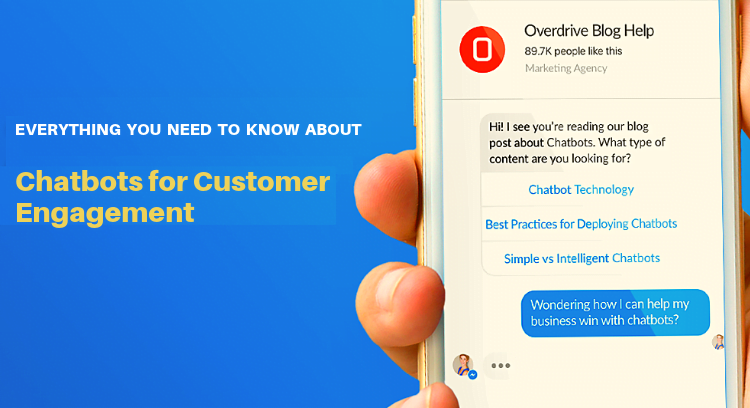
The word “chatbot” used to mean something narrow: a scripted flowchart that matched keywords and gave a canned reply. That’s not what an enterprise chatbot is anymore. Modern chatbots run on large language models, pull real answers from a company’s own knowledge base in real time, and in a growing number of cases, take action on a customer’s behalf instead of just pointing them to an article.
Here’s what enterprise chatbots actually handle today, and where a human still needs to be in the loop.
From Scripted Bots to LLM-Powered Support
Older chatbots worked off a decision tree: if the customer’s message matched a keyword, show the matching pre-written response. The moment a question fell outside the script, the bot either failed or handed off blindly.
LLM-powered chatbots work differently. They understand natural language rather than matching keywords, and they use retrieval-augmented generation (RAG) to pull accurate, current answers from a company’s actual documentation, product data, and policies instead of relying only on general training knowledge. That’s a meaningful distinction: a chatbot answering from a company’s real return policy is far more reliable than one guessing based on general knowledge of “how returns usually work.”
Agentic AI: Chatbots That Complete Tasks, Not Just Answer Questions
The bigger shift is the move from conversational bots to agentic AI, systems that don’t just answer a question but carry out the action behind it. Instead of telling a customer how to request a refund, an agentic system can verify the order, check the return policy, and process the refund directly, pulling from CRM, billing, and ticketing systems along the way.
This matters for cost and speed as much as convenience. Support that used to require a human to look something up, confirm a policy, and manually update a system can now happen in the same conversation, without the customer waiting on a callback or a follow-up email.
Where Chatbots Fit Across Channels
Customer conversations don’t stay in one place anymore, and a modern chatbot needs to work the same way across chat, email, WhatsApp, SMS, and increasingly voice, with the same context following the customer from one channel to the next. A customer who starts a conversation on a website chat widget and picks it back up over WhatsApp shouldn’t have to explain their issue twice.
Voice is worth calling out specifically. Voice-based AI agents in contact centers have moved from a novelty to a real deployment option, handling the same kind of reasoning and system access as a text-based chatbot, just over a phone call instead of a chat window.
Where a Human Still Needs to Be in the Loop
None of this means a business can remove people from support entirely, and trying to usually backfires. LLM-based systems can produce confident-sounding but incorrect answers, which is a real risk in regulated industries like healthcare, finance, and insurance, where a wrong answer has consequences beyond a bad customer experience.
The practical pattern that works: let the chatbot handle common, well-defined requests (order status, password resets, straightforward troubleshooting, policy questions with clear answers) and route anything ambiguous, emotionally charged, or high-stakes to a person, with the full conversation history handed over so the customer isn’t starting from scratch.
Data Handling Still Matters, Maybe More Than Before
Companies in health, finance, and insurance still need to be careful about where customer data lives and how it’s processed, and that hasn’t changed with the shift to LLM-based systems. If anything, it’s a bigger consideration now, since a chatbot pulling from a company’s live CRM or account data needs the same access controls and audit trail that a human support agent would.
Building on a company’s own infrastructure rather than routing every conversation through a third-party messaging platform gives more control over exactly where that data goes and how long it’s retained.
Frequently Asked Questions
Are enterprise chatbots just glorified FAQ pages now? Not the current generation. LLM-powered chatbots understand natural language and pull real, current answers from a company’s own knowledge base rather than matching keywords to scripted replies. The more advanced agentic versions go further and take action, like processing a refund, rather than only answering a question.
Can a chatbot actually complete a task, or does it just point customers to information? Agentic AI chatbots can complete a task directly; verifying an order, checking eligibility, and processing a refund or update within the same conversation, by connecting to a company’s CRM, billing, and ticketing systems. This is the main difference between an agentic system and a traditional FAQ-style chatbot.
Is it safe to let a chatbot handle sensitive customer data? It can be, with the right setup. The chatbot needs the same access controls, audit logging, and data handling practices a human support team would follow, especially in regulated industries. Building on infrastructure the company controls, rather than routing everything through a third-party consumer messaging app, gives more control over this.
Should a business remove human support agents entirely once a chatbot is in place? No. The most reliable setup routes routine, well-defined requests to the chatbot and hands off ambiguous or high-stakes conversations to a person, with full context carried over so the customer doesn’t repeat themselves.
Building a Chatbot That Actually Works for Your Business
A chatbot is only as useful as the systems it’s connected to and the data it’s allowed to see. Our team at Stellen Infotech builds enterprise application integrations that connect a chatbot to the systems it actually needs, including CRM platforms, so it can do more than answer questions from a script. If you’re weighing whether a chatbot makes sense for your support setup, get in touch and we can talk through what would actually fit.