The digital landscape is ever-evolving, and as we move towards March 2024, big changes are on the horizon for Google Search Console. Google has announced exciting new updates in regard to the substitution of the First Input Delay (FID) metric with Interaction to the Next Paint (INP) reporting. If you own a website or manage its online presence, these updates might impact your online strategy. But don’t worry! We’re here to guide you through all of this.
In this blog, we’re going to explain what these changes are, what you can look forward to, and adjust to these changes smoothly. So, let’s dive right in and unravel the mysteries of the digital future!
What is Interaction to Next Paint (INP)?
Interaction to Next Paint is a parameter that evaluates responsiveness on your website. It provides insights into the delays users might encounter while navigating the website. INP usually evaluates the time gap between a user interaction and subsequent visual update, known as the “next paint,” occurring on a website.
For instance, When a user clicks a button and there’s a delay of a second before the page visually updates; in this case, the INP value would be 1000 milliseconds. During this duration, the browser is occupied with executing website code and rendering the updated content on the page. Therefore, INP is an essential tool for websites that solely depend on user interaction for their business success.
What are the differences between FID and INP?
Google is replacing the First Input Delay with Interaction to Next Paint due to its ability to identify poor user experiences. There are some major differences between INP and FID as discussed below:
Measurement & Score Implications
INP can be measured in controlled environments using testing tools that simulate user actions and gauge reaction time.
FID should be measured in real user contexts, considering user devices and network conditions.
Focus on User Experience
INP concentrates on the time it takes for the response of a user’s interaction to be processed and visually updated on the screen. It measures page responsiveness by assessing how quickly users witness changes after their interactions.
FID measures responsiveness from a user’s initial interaction with the site (e.g., clicking a link) to when the browser can respond. It could be influenced by other parallel browser processes.
Event Capturing vs. Visual Rendering
INPtracks events related to layout stability, like image loading and element positioning, to assess visual stability.
FID focuses on interactions such as clicks and taps, capturing the time to process these actions.
Description of Duration Measured
FID evaluates the time span between the initial interaction and the start of event handler processing.
INP reflects the overall duration from a user’s interaction to the subsequent paint, encapsulating all aspects of the interaction’s processing and rendering.
Stages of Interaction
INP is concerned with the time span from initiating user input to rendering the visual response.
FID measures the delay from a user’s first interaction with a site to when the browser responds. It reflects the user’s first impression of site interactivity.
Evaluation Perspective
INP offers a broader perspective on user experience, analyzing interactivity beyond the initial page load. So, it considers multiple elements contributing to overall interactivity.
FID, on the other hand, focuses solely on the user’s perception of responsiveness during the first interaction. It reflects the web page’s ability to immediately respond to user input.
Webpage Complexity
INP is valuable for assessing complex web applications with multiple interactions and dynamic content. It helps Identify bottlenecks that may affect overall interactivity.
FID is relevant for simpler web pages or where user engagement hinges on immediate responses to initial actions.
Therefore, Understanding these differences between FID and INP helps developers make informed decisions about optimizing user interactions and crafting exceptional web experiences.
How to Adapt March 2024 Search Console Shift?
Change can be daunting, but with the right approach, you can navigate these updates seamlessly. Here’s how:
1. Familiarize Yourself
Take the time to explore the new version of Search Console as soon as it is rolled out. Familiarize yourself with the updated interface, features, and navigation. Therefore, you must carefully understand each aspect of it in detail. This initial exploration will make later adjustments much more accessible.
2. Update Your Knowledge
Stay informed about the changes by reading official announcements and guides from Google. So, they often provide valuable insights and tutorials on how to make the most of the new features.
Stay in the Loop: Keep an eye out for emails, blog posts, or notifications from Google that talk about these updates. Hence, these messages are like your friendly digital guides, helping you understand what’s new and how to use it.
Learn at Your Own Pace: Don’t worry if you’re not a tech wizard. Google’s guides are designed for everyone. So, take your time, go through the steps, and you’ll soon be a pro at using the fresh, improved Search Console.
3. Review Your Strategy
With improved insights at your fingertips, it’s a great opportunity to review your content and SEO strategy. Identify what’s working well and what needs improvement. Then, adjust your target keywords and content plan accordingly. Take this info and spruce up your website’s roadmap. Tweak your keywords so that your site shows up when people are searching for topics you cover. Polish your content plan to make sure you’re giving your visitors exactly what they’re looking for. With this, your website’s glow-up will be on its way!
4. Monitor Real-time Data
With the new real-time data feature, think of it as having a live dashboard for your website’s performance. Just like checking the weather to decide what to wear, regularly peeking at this dashboard lets you spot if more people are visiting your site and why. It’s like catching a wave of visitors or quickly fixing a hiccup if something’s not quite right. So, Stay updated with the data and ride the digital waves smoothly!
5. Seek Help if Needed
If the changes seem a bit overwhelming or if you’re feeling unsure, don’t hesitate to ask for help. You can connect with experts in digital marketing or join online communities where friendly folks can lend a hand. Remember, seeking help is like having a friendly guide on a new adventure – they can show you things you might not have noticed on your own. Embrace the support and keep moving forward with confidence!
Conclusion
In the world of web development, understanding metrics that gauge user experience is paramount. So, FID and INP, while both measuring user interaction and engagement, bring distinct perspectives to the table. As the web development landscape continues to evolve, these metrics remain indispensable tools for crafting a web environment where responsiveness and engagement seamlessly converge, leaving users with lasting impressions and positive interactions.
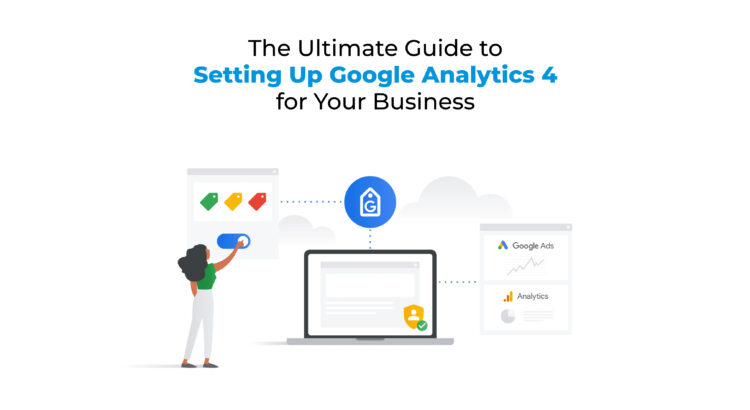
In this digital age, data is the key component of success, and Google Analytics 4 is the ultimate tool for your business growth. This comprehensive guide will discuss the power of GA4 and its unique features to examine user behaviour and conversions. Join us on a wonderful journey of GA4 and uncover the mysteries of its powerful components.
Whether you use Universal Analytics (UA) frequently or just entering into the sector of web analytics, this guide has got you covered! We will examine GA4 and UA and uncover the advantages of migrating to GA4, assuring an amazing transition for your business. Hence, fasten your seatbelts as we embark on this exhilarating adventure through the era of GA4! From setting up the monitoring code to crafting personalized funnels, we will equip you with the know-how and abilities to conquer the digital landscape.
Let’s get started!
Understanding Google Analytics 4
Google Analytics 4 (GA4) is the modern and latest version of Google’s web analytics platform. It is designed to provide companies with a deeper understanding of visitors’ behavior through different digital mediums. GA4 permits information-driven solutions and improves overall performance. Moreover, it takes holistic actions to monitor consumer interactions, going beyond just website activity and incorporating data from mobile apps and different digital channels. This cross-platform tracking allows for a comprehensive view of user engagement with your brand.
Key Differences Between GA4 and Universal Analytics (UA)
Universal Analytics has remained superior in the field of analytics for years. But, GA4 has emerged as its replacement with several key differences and advancements. The major difference includes the shift to the event-based model from the session-based model. In UA, data is based on sessions, whereas GA4 focuses on individual events. This change enables detailed information on user behavior and engagement.
In addition, GA4 includes new and improved functionality with easier navigation and improved reporting capabilities. It provides access to real-time data, advanced data visualization, and simplified data analytics through an analytics platform.
Advantages of Migrating to GA4
If you are new to GA4 or thinking of migrating to it, you will be amazed to learn about its unique benefits. Some of the key advantages include:
A deeper understanding of user behavior to gain a deeper understanding of their digital presence.
Cross-platform tracking enables a detailed view of the customer journey, resulting in more informed marketing strategies.
Enhanced data accuracy ensures more accurate data collection, reducing data mistakes and providing more reliable information.
Advanced machine learning capabilities to automatically uncover valuable insights and trends, making data analysis more efficient and insightful.
How GA4 Works and Track User Data?
GA4 uses a combination of cookies and consumer identifiers to track user interactions across digital platforms. When a user engages with your website or app, events based on these interactions are generated. Events can be predefined or custom which you define based on your unique business goals. You are also provided with the option of integrating data from other platforms, such as Google Ads, and YouTube. It leads to a combined view of your advertising efforts and user engagement.
Preparing for GA4 Setup
Google Analytics 4 (GA4) setup is not a complex process. Follow these steps to set up your GA4 property and start tracking data:
1st Step: Create a Google Analytics 4 Property
Sign in to your Google Analytics account or create a new one at analytics.google.com.
Click on “Admin” in the lower-left corner of the page.
In the “Property” column, select “Create Property.”
Choose “Web” as the property type and fill in the required details, including the property name, website URL, and industry category.
2nd Step: Install the GA4 Tracking Code
After creating the property, Google Analytics will offer you a tracking code (Measurement ID).
You need to copy and paste the tracking code into the header of your website or app. If you’re using Google Tag Manager, you can opt for the Tag Manager interface.
3rd Step: Set Up Data Streams
Data streams allow you to accumulate data from different platforms like websites and mobile apps. Set up data streams for each platform you need to track data from.
For websites, you can choose between “Web” and “Enhanced Measurement” data streams.
For mobile apps, set up an “App” data stream.
4th Step: Configure Event Tracking
GA4 makes use of еvеnts to track user intеractions for your wеbsitе or app.
Use the GA4 event parameters to personalize your tracking and collect relevant data for analysis.
5th Step: Test and Verify
After implementing the tracking code and configuring events, use “Rеаl-Tіmе ” reports in GA4 to tеst and vеrify that data is bеing collеctеd corrеctly.
Chеck for any еrrors or missing data and make necessary adjustmеnts.
Step 6: Explore Reports and Analysis
Oncе your GA4 propеrty is sеt up and data is bеing collеctеd, explore the various reports and analysis tools available in thе GA4 interface.
Gain insights into user behavior, audience demographics, acquisition channels, and more.
Now, you are all set to continue with GA4 features.
Installing the tracking code on your website
Now that you have the GA4 tracking code, it’s time to add it to your website’s HTML.Here are the steps:
Locate the header section of your website’s code and paste the tracking code just above the closing tag.
After saving the changes, publish the updated website code to make the tracking code live.
If your website has a content management system(CMS) like WordPress, you can add the tracking code via a plugin or theme option.
Use the Google Tag Assistant browser extension to ensure that the GA4 tracking code is installed and working properly on your website. Install it on your web browser if you haven’t already. Tag Assistant will scan the web browser and check for any Google tags including GA4 tracking codes. If the tracking code is applied correctly, you will see a green checkmark that says “GA4 Configured” on the website.
Defining Events and Conversions
Tracking user interactions and conversions is the core goal of implementing GA4. In this section, we will help you identify key events that should be tracked. You will learn how to set up custom events in GA4 and create goals for tracking conversions.
Identifying key events to track user interactions
Start with defining the clear goal of your business. You need to determine what actions on your website or app contribute to your business’s success. The next step is to analyze user behavior to Identify the most common and valuable actions users take on your website. Track useful events such as “Sign Up” for new users and “Upgrade Account” for existing customers.
Setting up custom events in GA4
To create a custom event in Google Analytics 4, enter the “Events” section in your property settings. Click “Create Event” to specify the event details, including name, parameters, and settings. Provide clear names and values for parameters to clarify the data. Implement custom event tracking code on your website using the “gtag(‘event’)” function for web or SDK methods for apps. This option gives you the ability to manage unique user interactions, making GA4 more aligned with business objectives.
Creating and tracking conversions and goals
Conversions and goals represent specific actions that users have successfully completed. They are an important metric for measuring the effectiveness of your marketing efforts and monitoring performance goals.
Identify actions that represent positive outcomes for your business, such as completing a purchase, signing up for a newsletter, or submitting a form.
Go to the “Conversions” section of GA4 and click on “Create Conversion Event”. Select the appropriate action you want to track as a change or set a custom action as a change.
Once your changes and goals are set, GA4 will start tracking. Monitor stats regularly to measure the success of your marketing efforts and make improvements based on data.
Integrating GA4 with Other Platforms
With Google Analytics 4, you can track all the important data for your business using event-based tracking. You can use default events, customize them, or create new events to suit your needs. Integrating GA4 with various apps enhances data usage. For example, integrating with Google Ads provides valuable data on impressions, ad clicks, and conversions to improve campaign performance. Exporting data to Google BigQuery allows you to combine it with other datasets and use SQL queries to gain deeper insights. GA4 empowers you to make the most of your data and optimize your business strategies.
Analyzing eCommerce data and sales funnels with GA4 provides valuable insight into the performance of your online store. GA4 allows you to track important eCommerce metrics like product views, add-to-cart actions, and completed purchases. By establishing a sales funnel, you can see where users fall in the buying process. You can optimize the user experience with these metrics and increase conversion.
Monitoring and Reporting in GA4
To get the most out of your data and manage the performance of your website, GA4 offers powerful analytics and reporting capabilities. In this section, we’ll explore how to create custom dashboards and reports, generate responsive email reports, and monitor real-time data and user behavior.
Setting up Custom Dashboards and Reports in GA4
Custom dashboards and reports allow you to create customized data visualizations tailored to your specific business objectives. To set up a custom dashboard in GA4:
Go to the “Dashboards” section of your GA4 property.
Click “Create” to start creating a new dashboard.
Choose from a wide range of widgets and data visualizations to add to your dashboard.
Customize the metrics and dimensions to see the most relevant data.
Save your custom dashboards to easily access the most important insights.
Monitoring Real-time Data and User Behaviour
GA4 provides real-time data tracking, allowing you to monitor user behavior and website activity as it happens. To access real-time data in GA4:
Go to the “Realtime” section in your GA4 property.
Explore real-time metrics like active users, events, and top-performing pages.
Use this information to gauge the immediate impact of marketing campaigns, track user engagement during events, or monitor traffic spikes.
Additionally, you can track user behavior in real-time to identify potential issues or areas of improvement on your website.
These tools empower you to make data-driven decisions, optimize your strategies, and ensure your business is always on the path to success.
Future-Proofing Your GA4 Setup
As technology and data privacy laws continue to evolve, future-proofing your GA4 system is essential to stay ahead in this digital world. In this section, we’ll explore three key components to ensuring your GA4 implementation remains efficient and relevant:
Staying updated with GA4 features and updates
Google is constantly improving GA4 with new features and improvements. Keep up to date with the latest updates, releases, and best practices to take advantage of the full potential of GA4. Check regular updates from Google regularly, attend webinars and training sessions, and join online communities to stay updated.
Adapting to Evolving Data Privacy Regulations
Data privacy regulations, such as GDPR and CCPA, have a significant impact on data collection and usage practices. Stay updated about compliance requirements and ensure that your GA4 setup adheres to these regulations. Implement data validation, obtain explicit user consent when required, and provide clear privacy policies to build trust with your audience.
Leveraging GA4 for continuous improvement and growth
GA4 provides more insights into user behavior, conversions, and marketing effectiveness. Continue to analyze your GA4 data to identify areas of growth and growth opportunities. Use A/B testing to test different methods and improve your website or app based on the results of collected data.
Conclusion
For businesses looking to increase their online presence, Google Analytics 4 has become a powerful tool. Businesses can learn more about their audiences by carefully analyzing the platform’s distinctive features and analytics. It enables them to refine their marketing tactics and produce outstanding customer experiences. Make use of GA4 to help your business flourish. Make an appointment to meet with us. Let’s take a step toward the future of Analytics together!
Are you tech wizards or Node.js enthusiasts seeking ways to boost the performance and scalability of your Node.js applications? If yes, you have landed in the right place! Node.js has revolutionized web development by enabling developers to build fast, scalable, and efficient applications using a familiar language. It has gained immense popularity for its non-blocking, event-driven architecture, for building node js performance APIs, and web applications. However, even the most well-designed applications may face performance challenges as they scale.
In this blog, we will go deep into some invaluable tips and strategies to optimize your Node.js applications. These tips will surely be helpful in enhancing performance monitoring and achieving higher scalability. So, sit back and get ready to discover the true potential of your Node.js projects.
Most Effective Ways to Achieve Your Business Goals
As you aim to scale your Node.js applications, remember your ultimate goal: achieving business success with better performance and smooth scalability. In this section, we will unveil the most effective ways to optimize your Node.js projects and elevate your business to new heights.
Node.js Performance Monitoring: Insights for Success
Before beginning with the optimization journey, it is crucial to gain a comprehensive understanding of your application’s performance. Implementing robust node js performance monitoring tools allows you to identify constriction, measure resource consumption, and detect potential issues in real time.
Selecting the Right Performance Monitoring Tool is crucial in optimizing the journey. Explore popular tools like New Relic, AppDynamics, and Prometheus to capture vital metrics like response times, CPU and memory usage, and database queries.
Performance Optimization Techniques for Node.js
Enhancing the performance of your Node.js API or web application involves a combination of smart coding practices and strategic architectural decisions. Some most important strategies for node js performance optimization include:
Asynchronous Programming: Take advantage of Node.js’s event-driven nature and asynchronous capabilities to handle multiple requests concurrently. It will substantially enhance the website’s performance by reducing response time and improving scalability.
Caching Mechanisms: Implement caching strategies like Redis or in-memory caching to store frequently accessed data, minimizing the need for repeated computations and database queries.
Database Optimization: Optimize database queries, utilize indexing, and employ connection pooling to reduce latency and enhance data retrieval efficiency.
Microservices Architecture: Scalability Redefined
Microservices architecture is a game-changing approach to achieve scalability for modern web applications. Such architecture breaks down large applications into smaller, independent services that communicate via APIs. This approach allows you 壯陽藥to scale individual components based on demand, making your application more flexible and resilient.
While microservices architecture offers immense benefits, it also introduces challenges, such as managing communication between services, monitoring, and increased operational complexity. Therefore, proper planning, design, and use of technologies like service mesh and API gateways are essential for a successful microservices implementation.
Load Balancing and Horizontal Scaling
Load balancing and horizontal scaling techniques ensure high availability, optimal performance, and seamless scalability of your Node.js applications. These strategies work collaboratively to distribute incoming traffic and efficiently handle increasing workloads.
Load Balancing:
Load balancing involves distributing incoming requests across multiple servers or instances to prevent overloading a single server. This ensures that each server handles a fair share of the traffic, minimizing response time and avoiding performance obstacles. Load balancers act as intermediaries between clients and servers, intelligently directing requests to the least busy server based on predefined algorithms. It benefits in improving performance, automating traffic redirection, boosting scalability, and reducing the risk of downtime due to server failures.
Horizontal Scaling:
Horizontal scaling involves adding more servers or instances to your application’s server pool to increase capacity. Unlike vertical scaling, horizontal scaling spreads the load across multiple servers, allowing for more efficient utilization of resources. It encourages elasticity, cost-effectiveness, easy deployment, and fault tolerance, ensuring continuous service availability.
Combining load balancing and horizontal scaling helps you create a robust and scalable infrastructure. It can adapt to changing demands, deliver exceptional performance, and provide a reliable user experience.
Optimizing External Service Calls
Optimizing external service calls is essential for ensuring the efficient and reliable performance of your Node.js application. External services like APIs, databases, or third-party applications can directly impact your application’s overall speed and responsiveness. There are certain techniques to handle these dependencies including, caching, request batching, and circuit breaking. Implementing these optimization techniques for external service calls can enhance the resilience and performance of your Node.js application.
We are here to Help – Step up your Website Game!
Are you ready to take your Node.js applications to new heights of performance and efficiency? Look no further than Stellen Infotech, a premier IT solutions provider with a team of skilled and experienced Node.js developers. Our experts are passionate about turning your ideas into high-performing realities.
To hire Node.js developers or explore our wide range of services, visit Stellen Infotech today!
Bottom Line
Improving & scaling your Node.js application’s performance is an ongoing process that requires a combination of optimization techniques, architectural decisions, and continuous monitoring. So, roll up your sleeves, put these strategies into action, and watch as your Node.js applications touch new heights of performance & scalability. With dedication and the right approach, your applications can stand out and make a lasting impact in the dynamic world of technology!
The digital era is evolving rapidly as a result of which businesses and creators find themselves at the threshold of a golden age. Currently, social media is making waves as its main focus is on enhancing the user experience. Many platforms like Instagram, Twitter, and Facebook have extensively gained momentum due to increased user engagement.
Recently, Meta has introduced Threads to investigate marketing opportunities and change the face of our interactions on social platforms. This app is getting more popular day by day and it has already surpassed 106 million members. It certainly possesses more advanced features and potential that offer an extraordinary canvas for artistic expression, community interactions, and entrepreneurial growth.
In this blog post, we are going to unveil a vast set of possibilities that lies at the heart of innovation and collaboration. This post will shed some light on the important developments and updates that Threads bring for both ambitious businesses and passionate creators.
Join us as we thread the past, present, and future, where innovation and imagination entwine to forge a brighter tomorrow. A captivating journey through the vibrant world of Threads 🌟 is awaiting advantageous minds and visionary creators.🚀💡
Exploration of Meta’s Threads App
This section will emphasize the whereabouts of the newly launched Meta’s Threads app. Let us discuss it below.
Meta’s Newly Launched Threads App
Threads is a revolutionary social networking platform aiming at redefining the way we connect and engage with others. It certainly introduces a dynamic and seamless way of sharing content and participating in public conversations.
Exciting Features
Users can effortlessly share text updates that allow them to convey their thoughts, experiences, and stories in up to 500 characters. Individuals can enjoy the added benefit of elevating their content with multimedia elements. Threads empower users to craft rich and immersive posts including five minutes of captivating videos to display stunning photos and linking to intriguing destinations. This can genuinely captivate their audience.
User-Friendly Experience and Interoperability
The app flawlessly integrates with your existing Instagram account. This provides a familiar and user-friendly interface for both new and seasoned users. Meta envisions a future where users will be able to interact and connect across different networks. To achieve this, they plan to make the app open and compatible with other social networking platforms.
Visionary Future and Endless Opportunities
Towards shaping the future of the Internet, the makers see users’ interactions and ideas have the power to spark groundbreaking innovations. Furthermore, they foster meaningful connections and empower them to explore new horizons. They can establish connections that surpass geographical and cultural barriers creating endless opportunities for self-expression.
Key Insights to Unlock the Essence of Threads
The write-up in this section will describe the key insights to unlock the essence of Threads. Let us discuss them further below.
Evaluating the Requirement
Threads can be finely tuned to empower influencers with excellent content sharing, enhanced visibility, and authentic engagement. Consequently, a user-centric approach makes sure that the audience finds enriching content experiences leading to a thriving and devoted community.
Assess the Advantages
Identifying the distinctive benefits of the platform enables a strategic alignment with influencers’ goals, amplifying their reach and impact. Also, understanding the advantages from the audience’s perspective ensures a compelling user experience. This establishes loyalty and engagement.
Crafting a Compelling Content Plan
Drafting concise and captivating micro-blogs, actively participating in conversations, and utilizing the platform’s visual features to their fullest potential is imperative. The content uploaded must be unique and quite engaging.
Fostering Active Audience Participation
Adaption of a different communication style may be necessary to build strong connections with users. It further requires a deep understanding of the platform’s rules and most effective strategies for connection. Connection and engagement of the audience is a must for positive results.
Allocating Assets Effectively
It is critically important to assess your available resources to effectively manage the platform and track its performance. Being adequately resourced will make sure successful integration into your overall marketing strategy.
Exploring Advertising Prospects
Check the platform’s targeting options, analytics, and ad environment to explore new opportunities. Evaluation of its reach and user behavior to ensure alignment with your target market is of utter importance.
Characteristics and Capabilities
Consideration of features provided by Threads can enhance your interactions with followers such as the ability to engage in conversations with multiple replies. Understanding the platform’s capabilities will help you make informed decisions on utilizing its potential for your business success. Prioritizing excellence must be your main motive.
Pinpointing your Market
Research the extent of your target audience’s Instagram usage and find out their interest in the Threads platform. If they engage more on Twitter or other platforms, Threads may be used in the near future when audience engagement increases.
Revolutionizing Usage for Micro-Influencers and Small Businesses
Let us shed some light on the usage of this new platform for Micro-influencers and small businesses in the succeeding paragraphs.
Empowering Micro-Influencers
In order to build a strong personal brand and connect with their target audience Threads empower micro-influencers in their journey as it allows them to showcase their creativity and expertise with ease.
Ideal Content Sharing and Discovery
Influencers can effortlessly share their valuable content while simultaneously discovering new and inspiring content from others. This allows them to stay up-to-date with emerging trends and continuously refine their own unique perspectives.
Utilizing Trending Topics and Hashtags
By riding the wave of trending topics and harnessing popular hashtags, influencers can stay relevant and attract more attention. This amplifies their engagement with the users.
Cultivating a Dedicated Community
Threads harness an environment where meaningful engagements and interactions flourish thus creating a sense of belonging and loyalty.
Comprehensive Content Experiences
Threads has the ability to share up to 10 items in a single post that allows micro-influencers to curate thorough content experiences. This encourages longer browsing sessions and captivates the audience. Also, it enables influencers to weave a narrative that truly resonates.
Algorithms for Enhanced Visibility
Threads provide algorithms that boost visibility and attract genuine followers who share a true interest in their content and message. This helps them to reach a wider audience.
Conclusion
In conclusion, Threads is a new social media app that brings exciting and vast opportunities for businesses and creators. To yield maximum benefits, thoroughly understand its features and see if it aligns with your goals and audience. Evaluate the platform before diving in so that you are aware of the consequences. Verified accounts may get short-term attention but it’s not a necessity to flourish on this exciting platform.
Let us embrace Thread’s potential together for creators, entrepreneurs, and visionaries. Make an impact in social media whilst navigating the digital world. The future is here — Are you ready to rise?
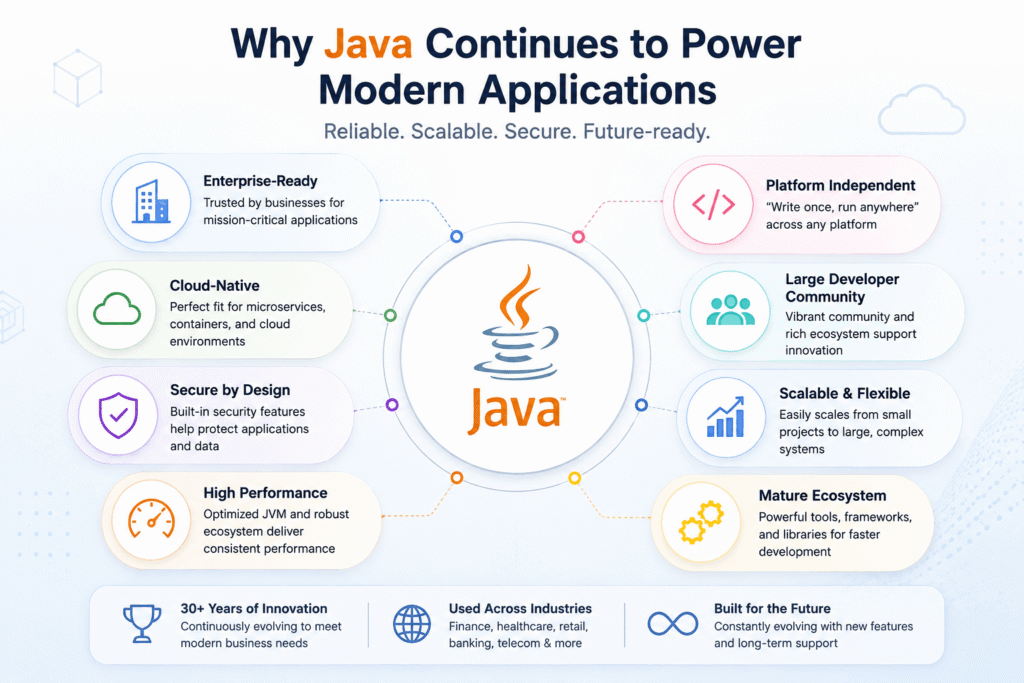
Java has been around for more than three decades, yet it remains a major technology choice for enterprise applications, backend systems, APIs, and large-scale software.
That raises an obvious question: why is Java still popular when so many newer programming languages have emerged?
The answer is not simply that Java is old and widely adopted. Modern Java has continued to evolve, while its ecosystem has expanded around cloud-native development, microservices, enterprise applications, security, and AI-enabled software.
Java 25, released in September 2025, is the latest Long-Term Support (LTS) release from Oracle. It introduced improvements across the language, runtime, security, performance, and developer productivity. The broader Java ecosystem has also continued to evolve, with Spring Framework 7 and Spring Boot 4 providing a modern foundation for Java applications.
So, is Java still relevant?
Yes. Java remains a strong choice for businesses that need scalable, maintainable, and long-lived applications, particularly in enterprise and backend development.
Let’s look at why.
Is Java Still Relevant?
Java remains relevant because it has evolved with modern software development instead of staying tied to the way applications were built decades ago.
Today, Java can be used for:
Enterprise applications
Backend systems
REST APIs
Microservices
Cloud-native applications
Financial and transaction-based systems
E-commerce platforms
Business automation software
Data-intensive applications
AI-enabled enterprise applications
Its long history is also an advantage for organizations that need to maintain large applications over many years. A mature ecosystem, established development practices, and a large pool of Java developers can make long-term development and maintenance easier.
What Is Java Commonly Used For?
Java is particularly useful when an application needs to handle complex business logic, multiple integrations, large numbers of users, or long-term maintenance.
For example, a business may use Java to build a backend that connects its customer portal, payment system, CRM, database, and internal applications.
Java is also widely used with frameworks such as Spring to build APIs and microservices. Spring Boot 4, released in 2025, builds on Spring Framework 7 and provides first-class support for Java 25 while retaining Java 17 compatibility.
This makes the modern Java ecosystem very different from the simple “write once, run anywhere” description often associated with older Java articles.
7 Reasons Businesses Still Choose Java
1. Java Continues to Evolve
One of the strongest reasons Java remains relevant is that the platform continues to receive regular improvements.
Java moved to a six-month feature release cycle, allowing new language, runtime, security, and performance improvements to reach developers more frequently.
Java 25, released in September 2025, included enhancements to the Java language, libraries, security, performance, monitoring, and developer productivity. Oracle also provides long-term support for Java 25, making it particularly relevant to organizations that prefer a stable version for long-running applications.
This matters to businesses because they do not necessarily have to choose between stability and modernization. They can adopt an LTS version for production systems while continuing to evaluate newer Java releases.
2. Java Is Well Suited to Enterprise Applications
Enterprise applications often have more complex requirements than simple websites or small applications.
They may need to:
Handle many users
Process large amounts of data
Connect with multiple systems
Implement complex business rules
Support different user roles
Maintain strong security controls
Remain operational for many years
Java has a mature ecosystem for these requirements.
Frameworks such as Spring help development teams build APIs, business applications, and distributed systems without having to create every underlying component from scratch.
For businesses, this maturity can reduce development complexity and make long-term application maintenance more manageable.
3. Java Can Support Large and Scalable Systems
Scalability becomes important when an application grows from hundreds of users to thousands or millions.
Java’s runtime, concurrency capabilities, performance improvements, and mature ecosystem make it suitable for many applications that need to handle significant workloads.
For example, consider an online financial platform.
It may need to process transactions while customers access their accounts, employees manage operations, and other systems exchange data through APIs.
The technology needs to handle these activities reliably while allowing the application to grow.
Java can be a strong fit for this type of environment, particularly when combined with a well-designed architecture and appropriate infrastructure.
It is important to remember that scalability does not come from the programming language alone. Architecture, databases, infrastructure, caching, application design, and monitoring all affect how well a system scales.
4. Java Has a Mature Development Ecosystem
Java is supported by a large ecosystem of frameworks, libraries, development tools, testing solutions, monitoring tools, and community resources.
Some commonly used technologies in the Java ecosystem include:
Spring and Spring Boot
Hibernate
Maven
Gradle
JUnit
Jakarta EE
JVM-based monitoring and profiling tools
This ecosystem gives development teams access to established solutions for common application requirements.
For businesses, that can be valuable when building complex software because developers do not have to solve every technical problem from the ground up.
5. Java Fits Modern Cloud-Native Development
Java is no longer limited to traditional server-based enterprise applications.
Modern Java applications can be built as microservices, packaged in containers, deployed to cloud platforms, and connected through APIs.
A typical cloud-native Java application might look something like this:
Microservices can split a larger application into smaller services that can be developed, deployed, and scaled independently.
Spring’s current ecosystem is strongly aligned with this model. Spring Framework 7 and Spring Boot 4 continue to develop Java’s role in modern application development, including REST-based applications and cloud-oriented architectures.
This gives businesses a way to modernize Java applications without abandoning the Java ecosystem.
6. Java Has Strong Security and Reliability Foundations
Security is another reason Java remains common in business-critical applications.
The Java platform provides features such as strong type checking, managed memory, exception handling, security-related APIs, and regular platform updates.
Java 25 also includes security improvements as part of its ongoing platform development.
However, it is important not to confuse language features with application security.
Java does not automatically make an application secure.
Security still depends on application architecture, authentication, authorization, dependency management, secure coding practices, infrastructure configuration, testing, monitoring, and regular updates.
Java provides a mature foundation, but development teams still need to implement security correctly.
7. Java Has a Large and Established Developer Ecosystem
A technology is easier to maintain when businesses can find developers, tools, documentation, frameworks, and community support around it.
Java has had decades to build this ecosystem.
That can be particularly useful for companies maintaining long-lived applications or modernizing existing Java systems.
Businesses can also choose from different development models, including in-house teams, dedicated developers, outsourcing, or specialist Java development partners.
For an organization with an existing Java application, this ecosystem can make it easier to find expertise for development, migration, modernization, maintenance, and performance optimization.
Java and AI: Is Java Still Relevant for AI Applications?
Java is not the dominant language for AI research and data science. Python remains extremely popular for those workloads.
However, that does not make Java irrelevant to AI.
Many businesses already operate large Java-based applications. They may want to add AI capabilities without rebuilding their entire technology stack.
Integrate machine learning capabilities into existing applications
Process application data for AI workflows
Develop APIs that connect business systems with AI models
Java 25 also introduced improvements related to AI capabilities, including language enhancements that can benefit applications integrating AI inference.
The practical takeaway is simple:
Python may be the preferred choice for many AI research and data-science workloads, while Java can be highly useful when AI needs to become part of an existing enterprise application.
Java vs Other Programming Languages
There is no programming language that is universally best.
The right choice depends on the application, team expertise, existing technology stack, performance requirements, development timeline, and long-term maintenance needs.
Here’s a simplified comparison:
Requirement
Java
Common Alternatives
Enterprise applications
Excellent fit
C#, Kotlin
Backend development
Excellent fit
Go, C#, Node.js
Microservices
Excellent fit
Go, Node.js, C#
Cloud-native applications
Strong fit
Go, C#, Kotlin
Data science
Good
Python
Machine learning research
Good
Python
Frontend web development
Not typically used
JavaScript / TypeScript
Modern Android development
Supported, but not the primary choice
Kotlin
Long-term enterprise systems
Excellent fit
C#, C++, Kotlin
This is not a ranking. Each language has strengths that make it suitable for different types of projects.
When Is Java a Good Choice?
Java can be a strong option when your application needs:
Complex business logic
Enterprise-grade architecture
Scalable backend services
Multiple system integrations
APIs and microservices
Long-term maintenance
A mature development ecosystem
A large pool of experienced developers
Cloud deployment
Reliable application performance
For example, Java can make sense for a business building an enterprise portal that needs to connect customers, employees, databases, payment systems, and third-party services through a centralized platform.
When Might Another Language Be Better?
Choosing Java should be based on the project rather than its reputation.
Another language may be a better fit in certain situations.
Python may be more suitable for data science, experimentation, and many machine-learning workflows.
JavaScript or TypeScript is generally a better choice for browser-based frontend development.
Go can be attractive for certain lightweight backend, networking, and infrastructure workloads.
Kotlin is generally preferred for modern Android application development.
The best technology decision starts with the application’s requirements rather than selecting a language first.
Is Java Still Worth Learning?
Yes, Java can still be worth learning, particularly for developers interested in backend, enterprise, cloud, and large-scale application development.
However, modern Java development involves more than learning the language syntax.
Developers working with Java may also need to understand:
Spring Boot
REST APIs
Databases
Microservices
Cloud platforms
Containers
Testing
Application security
CI/CD
Monitoring and observability
This broader skill set reflects how Java is actually used in modern software development.
What Does a Modern Java Technology Stack Look Like?
A modern Java project can include several layers rather than Java alone.
For example:
Layer
Common Technologies
Programming Language
Java
Application Framework
Spring / Spring Boot
API Layer
REST / HTTP
Data Access
Hibernate / JPA
Database
PostgreSQL, MySQL, Oracle, etc.
Build Tools
Maven / Gradle
Testing
JUnit and related tools
Deployment
Containers / Cloud platforms
Monitoring
Application monitoring and observability tools
The exact stack depends on the project.
The important point is that Java fits into a much broader modern development ecosystem.
Why Java Remains a Practical Business Choice
Java’s longevity is not simply the result of being an old programming language.
It has remained relevant because the platform has continued to evolve while retaining the ecosystem and stability that businesses value.
For organizations, that combination can be important.
A company may want to modernize an existing application, build a new enterprise platform, develop APIs, migrate a legacy system, or create a scalable backend. Java can support many of these requirements while providing access to a mature ecosystem.
At the same time, Java should not automatically be selected for every project.
The right question is not:
“Is Java the best programming language?”
A better question is:
“Is Java the right technology for this application’s requirements?”
For many enterprise and backend applications, the answer can still be yes.
Frequently Asked Questions
Is Java still popular?
Yes. Java remains widely used for enterprise applications, backend systems, APIs, microservices, cloud-native applications, and other large-scale software. Its mature ecosystem and continued development keep it relevant for modern application development.
Is Java still relevant for modern application development?
Yes. Modern Java development extends beyond traditional enterprise software. Java is now commonly used with frameworks such as Spring Boot for APIs, microservices, cloud-native applications, and distributed systems.
Is Java good for enterprise applications?
Yes. Java is well suited to enterprise applications that require complex business logic, scalability, integrations, security controls, and long-term maintenance.
Is Java good for backend development?
Yes. Java is a strong backend development option for APIs, business applications, microservices, distributed systems, and applications that need to handle significant workloads.
Is Java still relevant for cloud applications?
Yes. Java applications can be designed as microservices, packaged in containers, deployed to cloud infrastructure, and integrated with other cloud services. Modern frameworks such as Spring Boot support these development approaches.
Is Java good for AI development?
Java can be useful for integrating AI capabilities into enterprise applications and backend systems. Python remains more common for many AI research and data-science workflows, but Java can be a practical choice when AI functionality needs to work with an existing Java technology stack.
Is Java better than Python?
Neither is universally better. Java is particularly strong for enterprise and large-scale application development, while Python is widely used for data science, machine learning, automation, and rapid experimentation. The right choice depends on the project.
Is Java still worth learning?
Yes. Java remains relevant for developers interested in backend, enterprise, cloud, and large-scale application development. Learning Java alongside frameworks such as Spring Boot and related backend technologies can provide a broader modern development skill set.
What is the latest Java LTS version?
Java 25 is the current Long-Term Support release. It was released on September 16, 2025, and Oracle provides long-term support for the release.
Looking for Java Development Services?
Choosing the right technology is only the first step. The architecture, development approach, integrations, testing, security, deployment, and ongoing maintenance all influence the success of a Java application.
Stellen Infotech provides Java development services for businesses looking to build, modernize, migrate, integrate, or maintain Java-based applications. Its current Java offering includes custom Java development, enterprise Java development, Java web applications, migration, integration, cloud-based Java solutions, and maintenance and support.
If you are planning a new Java application or modernizing an existing system, the first step is to define your business requirements and determine whether Java is the right fit for your project.
Having a digital presence is crucial for every business these days. The website must be designed in such a way that it is easy for users to navigate and interact with. Among the various website platforms available WordPress stands out as a popular choice.
This is because it provides versatility, scalability, and a distinctive range of features. WordPress development allows the developers to leverage the capabilities of this platform, bringing out the best outcomes in the form of your website.
Moreover, its simplicity has been able to attract more consumers over the past few years. While it is quite straightforward so it is possible to build a website on your own using WordPress. But there are advantages to hiring a professional WordPress developer.
In this blog post, we will explore the benefits of working with a WordPress developer and it can improve your business’s online presence. From making your website easy to use to providing a smooth experience for visitors, find out why hiring a WordPress developer is worth it.
Delay no more and help your business succeed in the online world.
Advantages of Hiring a WordPress Developer for Your Business
There are numerous benefits to hiring a WordPress developer for your business. These are going to be discussed in the section below. So stay tuned with us on the journey ahead.
Increased Customization and Branding
A WordPress developer has all the qualities and expertise to tailor your website’s design. It ensures that it aligns perfectly with your brand identity. These developers can customize themes and templates according to your requirements.
They integrate unique features and functionalities thus setting your website apart from your competitors. You can create a visually appealing and cohesive online presence reflecting your brand’s personality and values.
Technical Expertise and Efficiency
A deep understanding of the coding and technical aspects is required in building a robust website. WordPress developers possess all these qualities and can handle complex tasks.
These include integrating plugins, optimizing website performance, and thus ensuring seamless functionality across different devices. They can troubleshoot any issues that may arise and ensure proper integration of third-party tools.
Enhanced Security and Maintenance
WordPress professionals understand the importance of robust security measures to safeguard against potential threats and hacking attempts. To achieve these goals, they stay updated with the latest security practices and implement essential measures. These include regular updates, strong password policies, and vulnerability scans to ensure your website remains secure.
Furthermore, they are capable of handling routine maintenance tasks ensuring your website operates smoothly and efficiently. Addressing technical glitches and performing backups are mainly performed by them to optimize your website’s performance.
SEO Optimization and Online Visibility
Leverage the expert skills & expertise of a WordPress developer to enhance your website’s SEO performance and improve its visibility in search engine results. A skilled developer can conveniently optimize your website’s structure, meta tags, headings, and URLs to ensure they are search engine friendly.
They are also capable of integrating important SEO plugins and tools. These help analyze & optimize the content and make the required changes to get better search engine rankings. Additionally, they assist you in improving your website’s loading speed, mobile responsiveness, and user experience.
Time and Cost Savings
It is a wise investment in the long run for it can lead to significant time and cost savings. A skilled WordPress developer can effectively handle various tasks related to website development and maintenance. This allows you to focus on core business activities.
They have the expertise to quickly resolve any glitches ensuring your website runs smoothly and without any barriers. A developer can customize your WordPress theme and plugins to meet your business requirements. This eliminates the need for expensive third-party solutions or custom development from scratch.
Responsive and Mobile-Friendly Design
It’s best to hire a WordPress developer for optimizing your website for different screen sizes and devices. A skilled developer can utilize responsive design techniques to adapt your website’s layout, images, and content to fit various screen resolutions.
They can also integrate mobile-friendly features including touch-friendly navigation, simplified forms, and quick-loading pages to enhance usability. You can cater to the growing number of mobile users, improve engagement and reduce bounce rates by prioritizing responsive and mobile-friendly design.
Scalability and Future Growth
With the expertise of WordPress developers, a scalable and flexible website can be designed that can accommodate your growing business needs. They optimize the website’s code and database structure to handle increasing traffic and data volumes efficiently.
A developer can integrate powerful plugins and tools that enable easy management and expansion of your website’s features and functionalities. You can flawlessly accommodate increased user demands, expand your online presence and effectively support your business’s growth by owning a scalable & adaptable website.
Access to Ongoing Support and Updates
A WordPress developer provides you with reliable and timely technical support ensuring that your website runs smoothly and efficiently. They address any issues or bugs that may arise keeping themselves updated with the latest trends and security patches.
For ensuring optimal performance, compatibility, and security they must regularly update your website’s core files. A developer must minimize the risk of vulnerabilities and thus protect your website from potential threats. Moreover, they assist you in implementing new features, functionalities, or design enhancements as your business grows.
Integration with Third-Party Systems
By integrating payment gateways, CRM software, email marketing tools or social media platforms a skilled developer can ensure smooth communication. This would further enable data exchange between your website and external systems.
They make use of plugins, APIs, or custom codes to establish secure and reliable connections. This enables you to automate processes, gather valuable data, and provide a cohesive user experience.
Specialized Functionality and Plugin Development
The expertise of these developers can create plugins and develop new ones that integrate with your website. It further enhances its functionality and provides unique offerings to the target audience.
Conclusion
In a nutshell, appointing a WordPress developer for your business brings a vast number of benefits. It can shoot up your online presence to new heights. These benefits range from optimizing your website for SEO to improving online visibility. It further extends to saving time and costs through efficient solutions and ensures a responsive and mobile-friendly design.
Additionally, their expertise in developing specialized functionalities and custom plugins allows you to offer unique experiences to your audience. Therefore, by investing in a WordPress developer, you are investing in the success and growth of your business.
Reach new heights in the dynamic digital landscape by hiring a WordPress developer today!!
The world of PHP development is full of countless possibilities and fascinating trends shaping the future of web development. It has backed unlimited websites and applications over the years due to its versatile nature, widespread adoption, and robust community support. With the advancement in technology, many new programming languages and frameworks emerge daily. Therefore, it becomes essential to explore the future of PHP development and understand its future prospects. If you want to experience it first hand then hire Indian PHP developers and see the magic of technology unfold.
This blog post will take you on a roller coaster ride updating you to make enlightened decisions in the ever-evolving world of PHP. We will be shedding some light on how PHP adapts to modern development practices. Furthermore, we will make sure to stock you with the tools and techniques necessary for efficient coding.
The future of PHP development is an adventure waiting to unfold and this blog post will surely act as a roadmap towards it. So, sit back to relax and commence on this journey to discover the future perspectives in the user-oriented world of PHP programming.
Let’s get started on this fun-filled journey together!!
Current Trends and Challenges in PHP Development
The preceding section of the blog will emphasize the current trends and challenges in PHP development. So, stay with us, and let us explore it together!!
Demand for High-Performance PHP Applications
Users today expect fast & faultless web affairs that increase the demand for PHP applications as they can handle heavy traffic and process data efficiently. Every organization struggles to optimize PHP code, implement caching mechanisms and take advantage of database optimizations.
Ultimately, they must be able to deliver exceptional speed and scalability. In order to stay ahead of the competition and ensure customer satisfaction meeting all these demands is critically important.
Securing PHP: Importance of Coding Practices
For protecting sensitive data and protecting vulnerabilities developers must prioritize secure coding practices. PHP developers can minimize the risk of security breaches by following best practices like input validation, and proper data sanitization.
Developers can ensure the integrity and trustworthiness of PHP applications by staying informed about emerging security threats and regular updates. In order to safeguard user information robust authentication and authorization mechanisms are of utmost importance.
The Rise of Alternative Languages and Frameworks
In recent years alternative languages and PHP frameworks have gained immense popularity. Thus, offering developers more choices and possibilities in web development. Among them, the prominent ones are Python, Ruby, and Node.js. These have relevantly unique strengths and features that make them stand out in the crowd.
While Python focuses on data science and machine learning, Ruby concentrates mainly on syntaxes. Nevertheless, Node.js is well-known for building scalable and real-time applications with its event-driven architecture. The evolution of these languages has truly brought innovation to the development universe. Thus, it empowers developers to choose the best tools for their projects.
Bridging PHP with Modern Web Development
PHP continues to adapt to meet the demands of modern web development. Improved error handling, strict typing, and standardized coding conventions bring PHP in line with modern coding standards.
This language has the ability to flawlessly integrate into modern web development workflows. Thus, it empowers developers to create scalable, efficient, and future-proof solutions.
Outsourcing Developers for PHP Development
Businesses seeking specialized expertise, cost-effectiveness, and flexibility outsource PHP development extensively. Businesses can hire web developers from India, the Philippines, or Argentina at affordable rates. This way they can access a global talent pool thus saving on recruitment costs to focus on their core competencies.
However, effective communication apart from addressing challenges in different time zone differences are genuinely necessary. For creating robust and tailored solutions while maximizing their resources selecting the right outsourcing partner makes a difference.
Insights into the Future of PHP Development
The PHP development insights suggest a continued evolution and adaptation of the language to meet the demands of modern web development. This section will discuss some key insights. So let us explore them in detail below together!!
Modernization of PHP
In recent years PHP has undergone many significant improvements. New features like strict typing, anonymous classes, and the adoption of modern coding standards have made an impact drastically.
These advancements enable PHP developers to write more efficiently and reliably while maintaining code. The execution speed of applications has been enhanced due to the inclusion of the JIT compiler in PHP 8. Efforts to improve performance empower developers to create cutting-edge applications that meet the demands of today’s digital landscape.
Integration with Other Technologies
Expanding its capabilities & versatility of integration with front-end frameworks like React, Angular, and Vue.js allows developers to build dynamic & interactive web interfaces. Database integrations are also very common these days enabling efficient data storage and retrieval. These integrations allow empowering developers to create robust and innovative solutions thus opening a world of possibilities.
Increased Use of AI and Machine Learning
With the tremendous availability of libraries & frameworks designed for AI & machine learning tasks, developers can easily inculcate advanced functionalities into their PHP projects. These technologies not only empower automation and data-driven decision-making but also facilitate personalized user experiences.
AI and machine learning algorithms enhance the capabilities of PHP applications. This can range from natural language processing and image recognition to predictive analytics and recommendation systems. Developers can create adaptive and intelligent applications so that they can analyze data, learn from patterns and make informed decisions. This, in turn, opens up new avenues in various domains.
Conclusion
Wrapping it up, the future of PHP development is quite promising, bright, and full of potential. The recent trends and advancements suggest that PHP will remain a reliable and versatile choice for web development in the times ahead. By embracing these advancements, developers can create innovative, secure, and high-performance PHP applications catering to the requirements of users in the modern era.
So, do not wait any further, collaborate with a reputable web and mobile app development company so as to implement industry best practices. Hire web developers from India and build a strong digital presence and expand your business footprint worldwide.
PHP is undeniably one of the most valuable and versatile web development languages in the present digital domain. It makes an attractive choice for beginners and experts due to its flexibility and ease of conversion.
A skilled PHP Developer from India can unquestionably bring your web projects to life. Hiring a PHP development company for your business can be quite satisfying but at also, it can be overwhelming on the side. But do not fret!
In this blog post, we will take you on a roller coaster ride ultimately enclosing the secrets of hiring PHP developers from India. We will shed light on various practical tips, insider knowledge and lastly, some proven strategies to streamline your hiring process.
Further, we will walk you through understanding the qualities to look for in a PHP developer.
From understanding the need and requirements of a PHP developer to exploring effective hiring strategies. Also, we’ll provide you with an in-depth explanation to streamline your hiring process. Get ready to navigate the PHP talent landscape and discover the secrets to building a stellar development team.
Buckle up your seat belts to enjoy the fun-filled journey ahead. Embrace the path to finding your perfect PHP development outsourcing!
Why Hire PHP Developers?
Hiring PHP Developers can effortlessly bring several advantages to your organisation. The following segment depicts these reasons in detail. Let us together have a look below:
Accelerating Software Development
PHP developers bring the specialised knowledge and skills necessary to streamline the development process with their expertise in PHP programming and web development. They are efficient in using frameworks as well as tools that not only enhance productivity but also build code reusability.
Troubleshooting abilities are inculcated in them to quickly identify and resolve various issues. They excel in collaboration and teamwork and also have integration capabilities enabling seamless connections with databases and third-party services.
Feasible
The expertise of PHP developers allows for rapid development thus reducing the time required to build web applications. They help in minimizing development delays. Their knowledge of scalability and performance optimization ensures that applications are built for speed and efficiency.
Database Connectivity
PHP developers can efficiently establish and manage connections between PHP applications and databases. They further excel in executing SQL queries, optimizing performances and thus ensuring data security. Additionally, their proficiency in handling database interactions and preventing vulnerabilities contributes to the seamless functioning of web applications.
Execution is Cost Effective
PHP developers tend to have competitive rates compared to developers in other programming languages as PHP is known for its affordability. This language eliminates the need for expensive licencing fees and allows organisations to leverage a wide range of free frameworks, libraries and tools. It enables cost savings in terms of software licences and maintenance.
Detailed Process to Hire a PHP Developer
This section sheds relevant light on the detailed process to hire a PHP developer. Come lets take a closer look at it together!!
Discover the Purpose of Hiring a PHP Developer
Starting by determining the purpose of hiring a PHP developer is beneficial. Furthermore, defining the specific tasks or projects where their expertise is needed is of great help. Once the purpose is established, a job description must be laid out outlining the required skills and experience required. This includes proficiency in PHP frameworks, database integration and front-end technologies.
One can advertise the job openings on relevant platforms such as job boards, professional websites and developer communities. Candidates who meet the criteria can be shortlisted through screening resumes and portfolios. Conducting interviews thoroughly to access technical skills, problem-solving abilities and cultural fit can prove to be of great help.
Classify
You can certainly classify PHP developers based on the requirements of your PHP project into the following categories:
Beginner
These developers have a basic understanding of PHP and its related syntaxes. Generally, they have limited experience working on small-scale or personal projects. However, they are eager to learn and gain more experience and may require regular monitoring and prompts to work on complex projects. They are preferably fit for in-house projects as a whole.
Mid-Level
These developers bring a valuable combination of experience and technical skills as they are capable of executing projects effectively while optimizing resources. They have a track record of completing projects within budgetary constraints, making them a cost-effective choice. Moreover, their problem-solving abilities and familiarity with PHP frameworks enable them to handle complex tasks and deliver high-quality results.
Expert
An extensive pool of practical knowledge and project experience these developers are well versed in PHP frameworks. They possess strong problem-solving skills and excel in architectural design and code optimisation. They are indeed a perfect match for handling client projects.
Compiling a List of Frameworks
After the identification of the category and purpose of your project, it is very crucial to compile a well-thought-out list of PHP frameworks. These must essentially align with your organisation’s needs. This step enables you to streamline the process of evaluating factors such as project development rates, required skill sets and proficiency levels.
A lightweight PHP framework may be advantageous if your objective is to rapidly develop a software product. On the other hand, however, high-scale projects require robustness and scalability where the Laravel framework emerges as a strong contender. Laravel simplifies rapid application development and provides a local development engine and a flexible routing system.
Deciding Between Outsourcing and In-House PHP Developers
While in-house refers to hiring and managing a team of PHP developers within your organisation outsourcing involves hiring a third-party company or freelancers. Outsourcing comes with its share of benefits like cost savings, and access to a wider talent pool apart from flexibility in scaling.
PHP development agencies or freelancers allows you to tap into specialised expertise. Also, outsourcing can help expedite project timelines by leveraging the external team’s existing infrastructure and processes. You can definitely outsource PHP development to a software development company.
Hiring in-house PHP developers provides more control, direct communication and a deeper understanding of your organisation’s goals and culture. They are readily available and can quickly address any issues or changes. They undoubtedly establish better relationships and alignment within your organisation.
The ultimate decision choosing between outsourcing and in-house PHP developers depends on many factors. These include project complexity, budget, timeline, required skill sets and also long-term strategic goals of your organisation.
In some cases, it may be beneficial to consider a hybrid model that combines in-house and outsourced talent. This allows you to take advantage of both options while creating a balanced development team.
Wrapping Up
In a nutshell, hiring an expert PHP developer from India offers a transformative opportunity for your web development projects. Following the process shared in this blog post can certainly smoothen the hiring process. It will enable you to find the perfect match and leverage the cost-effectiveness that Indian developers bring.
Elevate your projects to new dimensions by hiring an experienced and exceptional PHP developer from India.
Do you eagerly want to generate exceptionally high useful traffic for your business website? Do you want to look out for extraordinary Social Media Tips in order to build a strong social media presence? Worry not and stop looking any further. This blog post is written with the intention of facilitating you with the ultimate inventory of tips and tricks to stand out from the crowd in the ever-evolving social media terrain.
It is considered a tedious task to master the art of social media marketing and ultimately emerge victorious. Those days have taken a backseat when one posted aimlessly and hoped for the best outcomes. Nowadays the trend is such that a single viral video has the power to turn a small business into an overnight sensation.
So, come and learn with us the latest tips to increase your social media presence. Here, we will discover the secrets that will set your brand apart from the competition, from erupting conversations to drafting visually stunning posts. Furthermore, we will Harness the power of influencer partnerships and algorithm insights to create a dedicated and devoted following.
This blog will serve as your roadmap to brand success and also an unstoppable surge of website traffic. So, buckle up your seatbelts fellow digital adventurers! Get set ready to unlock the true and full potential of social media like never before.
Tips for Enhancing Brand Visibility & Increasing Website Traffic through Social Media:
This segment of the blog post will throw light on the basic objective of this content generation. It will guide you through the various tips and tricks adopted these days to enhance your brand’s visibility. So, let us take a closer look at it together.
Understand Your Target Audience:
The cornerstone of successful social media marketing is definitely understanding your target audience. It allows you to tailor your content, messaging and advertising efforts to align with the right audience. By taking a look into their demographics, interests and behaviours you certainly gain valuable insight to create engaging content and thus establish a genuine connection.
This understanding helps you craft strategies that effectively reach your target audience. Thus, driving brand awareness, loyalty, brand presence and ultimately website traffic.
Define Your Brand Voice and Image:
The language you use to communicate with your customers on social media is mainly surrounded by the tone and style of your brand. It should align with your brand values as well as resonate with your target audience.
In a very similar way, your brand encompasses visual elements such as logos, colours, typography and imagery reflecting your brand’s personality. This evokes a consistent look and feels across your social media presence.
Choose the Right Social Media Platforms:
For maximizing your brand’s visibility and engagement choosing the right social media platform is of utter importance. You can evidently focus your efforts where they are most likely to be by understanding your potential audience and their preferred platforms.
In order to make sure that your content reaches the right audience selecting the right platforms is highly necessary. Choose from platforms like Facebook, Instagram, Twitter, LinkedIn or others that align with your brand’s goals and target demographics. This leads to brand awareness, increased website traffic and ultimately conversions.
Develop a Content Strategy:
A well-defined content strategy serves as the backbone of any successful social media presence for building brand identity. It makes certain that your brand consistently delivers relevant, valuable and engaging content to your potential audience.
You can definitely establish a cohesive and effective approach to social media by understanding your audience’s preferences, setting clear goals and mostly planning content in advance.
Utilize Social Media Advertising:
To amplify your brand’s reach and drive targeted traffic to your website social media advertising is undoubtedly a powerful tool. By accessing various targeting options you can reach your ideal audiences with precision. Social media ads allow you to showcase your products or services, promote special offers and create compelling calls to action campaigns.
These ads empower you to optimize your campaigns and achieve maximum results on investment. They provide the ability to track and measure results in real-time.
Engage and Interact with Your Audience:
Interactions with your audience are the inner strength of social media marketing. You can effectively build meaningful relationships with your audience by actively participating in conversations, responding to comments and messages and ultimately establishing a sense of community.
Providing timely and valuable responses shows genuine interest in their opinions, concerns and feedback. Running contests or polls, encouraging user-generated content and asking questions to spark conversations can prove to be of great help. For improving customer satisfaction and creating a positive brand reputation create a two-way dialogue.
Analyze and Optimize Your Social Media Performance:
Taking into account when is your target audience most active in addition to which platforms drive the most engagement can be achieved by regularly reviewing your social media analytics. You can further gain insights into what content resonates with your audience through it. Use these insights wisely mainly to refine your content strategy, identify trends and make data-driven decisions. To further optimize your social media efforts experiment with different content formats, and posting times, and identify trends to gain maximum results.
Integrate Social Media with Your Website:
Expand your reach organically by adding social media sharing buttons enabling visitors to easily share your website content with their networks. Display of social media feeds on your website provides real-time updates while showcasing your social media accounts thus streamlining the user experience. This not only boosts credibility but also increases follower counts. Embedding social media widgets or plugins on your website drives visitors directly to engage with social media content.
Conclusion:
You can only flourish in the ever-evolving world of social media if you work with patience and persistence. It is very true that social media marketing holds great potential but at the same time, they require time to yield consistent results. The tried and tested tips and tricks explained in this blog post are guaranteed to deliver long-term benefits. For a successful social media marketing strategies campaign adopting a customer-centric approach is highly essential. The effectiveness of social media certainly hinges on its proper utilization unquestionably. Social Media can indeed prove to be a game changer in the long run for any business or organisation.
A strong social media presence is more than having a profile on Facebook, Instagram, LinkedIn, or TikTok. It means consistently reaching the right audience, sharing useful content, engaging with customers, and building recognition for your brand.
For businesses, social media can support several goals at once, including brand awareness, customer engagement, website traffic, lead generation, and customer retention. But simply posting regularly does not guarantee results.
A successful social media strategy starts with understanding your audience, choosing the right platforms, creating content that people find useful, and measuring what actually works.
In this guide, we’ll cover 15 practical ways to improve your brand’s social media presence, along with platform selection tips, content ideas, key metrics, common mistakes, and a simple 30-day action plan.
How Can You Improve Your Social Media Presence?
You can strengthen your brand’s social media presence by:
Defining clear social media goals
Understanding your target audience
Choosing the right platforms
Maintaining a consistent brand identity
Creating a focused content strategy
Publishing useful and original content
Using short-form video
Maintaining a consistent posting schedule
Engaging with your audience
Responding to comments and messages
Working with relevant creators
Using user-generated content
Studying competitors
Tracking meaningful performance metrics
Continuously testing and improving your strategy
The key is not to do everything at once. Focus on the platforms and activities that have the greatest potential to reach your target audience.
What Is a Strong Social Media Presence?
A strong social media presence means having a consistent and recognizable brand across the platforms where your target audience is active.
It includes more than the number of followers your business has.
A strong presence typically combines:
Consistent branding
Relevant and useful content
Regular audience engagement
Active community management
A recognizable brand voice
Meaningful interactions with followers
Measurable business outcomes
For example, a company with 5,000 highly relevant followers who regularly interact with its content may have a stronger social presence than a company with 50,000 followers but very little engagement.
The goal is not simply to be visible. It is to be relevant to the right people.
Why Does Social Media Presence Matter for Your Brand?
Social media gives businesses a direct way to communicate with existing and potential customers.
A well-managed presence can help your business:
Increase Brand Awareness
Regularly appearing in your audience’s social feeds helps people become familiar with your brand, products, services, and expertise.
Build Customer Relationships
Social platforms allow businesses to have conversations rather than simply broadcast advertisements. Responding to questions and acknowledging feedback can make your brand feel more accessible.
Drive Website Traffic
Useful social content can encourage people to visit your website, read your articles, explore your services, or learn more about your products.
Generate Leads
Social media can contribute to lead generation through educational content, landing pages, direct messages, lead forms, and other conversion opportunities.
Strengthen Brand Trust
Consistent communication, useful information, customer reviews, case studies, and behind-the-scenes content can help establish credibility.
Support Customer Service
Customers increasingly use social platforms to ask questions or raise concerns. A responsive social presence can improve the overall customer experience.
15 Ways to Improve Your Brand’s Social Media Presence
1. Define Your Social Media Goals
Before creating content, determine what you want social media to achieve for your business.
Your goal could be to:
Increase brand awareness
Generate leads
Drive website traffic
Improve customer engagement
Build an online community
Increase product or service enquiries
Support customer service
Different goals require different strategies.
For example, a business focused on brand awareness may prioritize reach and video views, while a B2B company focused on lead generation may pay more attention to website visits, enquiries, and qualified leads.
Start with two or three measurable goals rather than trying to achieve everything simultaneously.
2. Identify Your Target Audience
Your social media strategy should be based on the people you want to reach.
Understand:
Who they are
What problems they face
What information they need
Which platforms they use
What type of content they engage with
What influences their buying decisions
For B2B brands, this may include job roles, industries, company size, and business challenges.
For B2C brands, factors such as interests, purchasing behavior, location, and demographics may be more relevant.
The better you understand your audience, the easier it becomes to create content that feels relevant rather than promotional.
3. Choose the Right Social Media Platforms
You don’t need to maintain an active presence on every social network.
Instead, focus on platforms where your target audience is most likely to spend time.
Platform
Often Suited For
Content Opportunities
LinkedIn
B2B and professional audiences
Industry insights, case studies, thought leadership
Instagram
Visual brands and communities
Reels, carousels, stories
Facebook
Communities and broad audiences
Videos, discussions, groups
YouTube
Education and long-form discovery
Tutorials, explainers, reviews
TikTok
Short-form discovery
Educational and entertaining videos
The right platform depends on your audience, industry, content capabilities, and business goals.
Being highly active on two relevant platforms is often more effective than posting inconsistently across five.
4. Create a Consistent Brand Identity
People should be able to recognize your brand even before they see the account name.
Maintain consistency across:
Profile images
Colors
Typography
Visual style
Tone of voice
Messaging
Content themes
Your social profiles should also provide consistent information about your business, including your description, website, services, and contact details.
Consistency helps strengthen brand recognition and makes your business appear more professional.
5. Build a Content Strategy
Posting whenever you have something to say is not a strategy.
Create a few content pillars that guide what your business publishes.
For example, a technology company could build content around:
Industry insights
Educational content
Product or service knowledge
Customer success stories
Company updates
A content strategy also helps your team maintain variety without losing focus.
Before publishing a post, ask:
Does this content educate, inform, entertain, inspire, or help the audience solve a problem?
If the answer is no, reconsider whether it needs to be published.
6. Create Useful and Original Content
People follow brands because they expect something valuable from them.
Instead of making every post promotional, create content that helps your audience make decisions, solve problems, or understand something better.
Useful content can include:
How-to guides
Industry insights
Original research
Case studies
Expert opinions
Tutorials
Checklists
Customer stories
Data-driven posts
Frequently asked questions
Originality matters too.
Rather than repeating what competitors have already published, add your own perspective, examples, data, or experience.
The more useful the content, the stronger the reason for someone to follow and share it.
7. Use Short-Form Video
Short-form video has become an important format across major social platforms.
You don’t need expensive production equipment to get started.
Businesses can create short videos around:
Quick tips
Product demonstrations
Frequently asked questions
Industry insights
Behind-the-scenes content
Customer stories
Tutorials
Common mistakes
The most important factor is relevance, not production complexity.
A simple video that answers a real customer question can be more valuable than a highly produced video with little useful information.
8. Maintain a Consistent Posting Schedule
Consistency helps your audience know when to expect content from your brand.
However, consistency does not mean posting several times every day.
Choose a schedule your team can realistically maintain.
For example:
3 LinkedIn posts per week
3 Instagram posts per week
2 short-form videos per week
Your ideal frequency will depend on your platform, audience, resources, and content format.
It is better to consistently publish useful content than to post frequently for a few weeks and then disappear.
9. Engage With Your Audience
Social media is not a one-way communication channel.
When someone comments on your post, asks a question, or shares your content, respond where appropriate.
You can also encourage interaction by asking:
What do you think?
Which option would you choose?
What challenge are you facing?
What would you like us to cover next?
Genuine conversations help turn followers into an active community around your brand.
10. Respond Quickly to Comments and Messages
A social media presence also influences how customers perceive your customer service.
Ignoring questions or taking too long to respond can create a negative impression.
Create a simple process for monitoring:
Comments
Direct messages
Product questions
Customer complaints
Brand mentions
For larger organizations, define who is responsible for responding and when issues should be escalated to another team.
The goal isn’t simply to respond quickly. It is to provide a useful and accurate response.
11. Work With Relevant Micro-Influencers
Influencer marketing does not always require working with celebrities or accounts with millions of followers.
Micro-influencers often have smaller but highly engaged audiences within specific communities or niches.
When evaluating a creator, look beyond follower count.
Consider:
Audience relevance
Engagement quality
Content style
Industry expertise
Audience trust
Previous brand collaborations
The right creator should have an audience that genuinely overlaps with your target customers.
12. Use User-Generated Content
Your customers can become an important source of social proof.
User-generated content (UGC) can include:
Customer reviews
Product photos
Testimonials
Videos
Case studies
Social mentions
With appropriate permission, businesses can repurpose this content across their social channels.
UGC can make your brand feel more authentic because potential customers can see how real people interact with your product or service.
13. Analyze Your Competitors
Competitor research can help you understand what is working within your industry.
Look at:
Which platforms competitors use
What topics they discuss
Which formats generate engagement
How frequently they post
How they respond to customers
Which posts receive the most interaction
The goal isn’t to copy competitors.
Instead, identify gaps.
If competitors repeatedly discuss the same topics, consider whether your brand can provide a more useful, original, or practical perspective.
14. Track Meaningful Social Media KPIs
Follower count is easy to measure, but it doesn’t tell the complete story.
Track metrics that connect to your actual business goals.
Metric
What it tells you
Reach
How many people saw your content
Engagement rate
How actively people interacted
Follower growth
Whether your audience is expanding
Click-through rate
Whether content drives traffic
Leads
Whether social generates prospects
Conversions
Whether social contributes to business results
The right metrics depend on your objectives.
If your goal is awareness, reach and engagement may matter most. If your goal is lead generation, clicks, leads, and conversions become more important.
15. Test, Learn, and Improve
There is no universal social media formula that works for every business.
Test different:
Topics
Headlines
Formats
Posting times
Video lengths
Calls to action
Visual styles
Then compare the results.
Over time, you’ll discover which content resonates with your audience and which activities produce meaningful business outcomes.
Social media should be treated as an ongoing process rather than a campaign with a fixed end date.
What Should You Post on Social Media?
A common challenge for businesses is simply knowing what to publish.
A balanced content mix can include:
Educational Content
Teach your audience something useful through guides, tips, tutorials, or industry insights.
Industry Content
Share relevant trends, research, news, and your perspective on developments affecting your customers.
Customer Stories
Show how customers use your products or services and the results they achieved.
Behind-the-Scenes Content
Give your audience a look at your people, culture, processes, or product development.
Product and Service Content
Explain what you offer, but focus on the problems you solve rather than simply listing features.
Interactive Content
Use polls, questions, quizzes, and discussions to encourage participation.
User-Generated Content
Show real customer experiences where appropriate and with permission.
The right mix will depend on your audience and business objectives. There is no requirement to follow a fixed percentage for every content type.
How to Measure Your Social Media Presenc
Improving your social media presence requires more than publishing content and checking how many likes a post received.
Start by connecting your metrics to your business goals.
Goal: Generate leads Track: Link clicks, enquiries, lead form submissions
Goal: Generate revenue Track: Conversions, qualified leads, revenue attributed to social
Review your performance regularly and identify which topics, formats, and platforms are producing the strongest results.
One important rule is to avoid optimizing solely for vanity metrics. A post with fewer likes but several qualified enquiries may be far more valuable to your business than a post with thousands of impressions and no meaningful action.
Common Social Media Mistakes Brands Should Avoid
Even businesses with active social profiles can struggle to build meaningful results.
Avoid these common mistakes:
Trying to Use Every Platform
Being everywhere isn’t necessary. Focus on the platforms that matter to your audience.
Posting Only Promotional Content
People don’t follow brands just to see advertisements. Balance promotional posts with useful and engaging content.
Copying Competitors
Competitor research is useful, but copying their content makes your brand less distinctive.
Posting Inconsistently
Long gaps between posts make it harder to build an active audience.
Ignoring Comments and Messages
Social media should support two-way communication. Don’t treat it as a publishing channel only.
Buying Followers
Fake or irrelevant followers can make your audience numbers look larger without creating meaningful engagement or business value.
Chasing Every Trend
Not every trend fits every brand. Use trends selectively when they make sense for your audience and positioning.
Focusing Only on Follower Count
A growing audience is useful, but engagement, leads, conversions, and customer relationships are often more meaningful indicators of success.
Not Reviewing Performance
Without regular analysis, you may continue investing time in content that isn’t producing results.
A 30-Day Plan to Improve Your Social Media Presence
If your social media strategy needs a reset, you don’t have to change everything overnight.
Use this simple 30-day plan.
Week
Focus
Key Actions
Week 1
Audit
Review profiles, audience, competitors, content, and current performance.
Week 2
Strategy
Define goals, content pillars, platforms, and publishing schedule.
Week 3
Execution
Publish consistently, test formats, and actively engage with your audience.
Week 4
Optimization
Review performance, identify winning content, and adjust the strategy.
At the end of the month, compare your results with your starting point.
Identify what improved, what didn’t, and which activities deserve more attention in the next 30 days.
Social media growth is usually the result of consistent improvement rather than one viral post.
Conclusion
Building a strong social media presence requires more than creating accounts and publishing posts.
Your brand needs a clear strategy, a defined audience, consistent messaging, useful content, active engagement, and a way to measure whether your efforts are contributing to business goals.
Start by choosing the platforms that matter most to your audience. Develop content around their needs and questions, maintain a consistent publishing schedule, and use performance data to understand what works.
Most importantly, don’t measure success only by follower count. A smaller, relevant audience that trusts your brand and takes meaningful action can create more business value than a large but disengaged following.
Social media is an ongoing process. As your audience, platforms, and business goals change, your strategy should evolve with them.
Need help developing a stronger digital presence for your business? A well-planned social media strategy can work alongside your website, content, SEO, and broader digital marketing efforts to create a more consistent customer journey.
Frequently Asked Questions
How can I improve my brand’s social media presence?
Define clear goals, understand your target audience, choose the right platforms, publish useful content consistently, engage with followers, and track meaningful performance metrics. Focus on building relevance and trust rather than simply increasing your follower count.
Which social media platform is best for businesses?
There is no single best platform for every business. LinkedIn is often effective for B2B brands, while Instagram, Facebook, YouTube, and TikTok can be valuable for different audiences and content formats. Choose platforms based on where your target customers are active.
How often should a business post on social media?
There is no universal posting frequency. Start with a schedule your team can consistently maintain, such as a few quality posts per week. Monitor engagement and performance to determine what frequency works best for your audience and platform.
What type of content performs best on social media?
Useful, relevant, and original content generally performs better than content created only to promote a product or service. Educational posts, short-form videos, customer stories, industry insights, tutorials, and interactive content can all help increase engagement.
How long does it take to build a social media presence?
Building a recognizable social media presence takes time. Businesses may see early improvements in engagement and reach within a few months, but meaningful audience growth and business results usually require consistent content, testing, and optimization over a longer period.
How do I measure social media performance?
Measure performance based on your business objectives. Relevant metrics can include reach, engagement rate, follower growth, website traffic, clicks, leads, and conversions. Focus on metrics that demonstrate business value rather than relying only on likes or follower numbers.
Should small businesses use multiple social media platforms?
Small businesses don’t need to be active on every platform. It is usually more effective to focus on one or two platforms where their target audience is most active and build a consistent presence before expanding to additional channels.
Should I hire a social media marketing agency?
An agency can be useful when your business lacks the time, expertise, or resources to develop and manage a consistent social media strategy. Before hiring one, evaluate its experience, previous results, content capabilities, reporting process, and understanding of your industry and target audience.
Client stories
What our clients say
Trusted by 2,000+ businesses across 80 countries since 2011.
“
Stellen Infotech and its highly professional team of developers did a great job with my website. Thanks a ton for doing such a marvellous job!
Seth PhillipsBusiness Owner, USA“
I couldn't be any happier with my website. Stellen Infotech has pleased me with its services and customer support. I highly recommend their developers and will surely hire them again.
Tim ConnellFounder, Australia“
Stellen Infotech gave real value to my business website. I highly recommend them as a web development company that is professional, talented and competent.
Peter MeedDirector, UK
Our Clients, Our Pride
Ready to build software that ships and AI that works?
Tell us what is slowing your business down. Our team will map the right mix of custom software, mobile apps and AI automation — and show you a working prototype within weeks.